Be yourself; Everyone else is already taken.
— Oscar Wilde.
This is the first post on my new blog. I’m just getting this new blog going, so stay tuned for more. Subscribe below to get notified when I post new updates.
Be yourself; Everyone else is already taken.
— Oscar Wilde.
This is the first post on my new blog. I’m just getting this new blog going, so stay tuned for more. Subscribe below to get notified when I post new updates.
Introduction
This particular discussion has the goal of comparing both the United States and Afghanistan and their policies revolving around opioids. The main objective is to see how institutions in these countries try and reduce harm related to opioid use and the impact these drugs have on communities, individuals, and social institutions. I thought it would be interesting to focus on the United States and Afghanistan because these two countries are among a list with the highest overdose death rates.
The United States Opioid Statistics
The statistics surrounding opioid use in the United States are harrowing. In 2017 alone, there were 70,237 recorded drug overdose deaths, and of those deaths, 47,600 involved an opioid (Scholl et., al 2018). Currently, an estimated 130 people every day in the United States die from an opioid-related drug overdose (Assistant Secretary of Public 2017). Something that I learned and found fascinating was the demographics to those who use these drugs. Those addicted to opioids, both legal and illegal, are increasingly young, white, and female, with 1.2 million women addicted compared to 0.9 million men in 2015 (Assistant Secretary of Public 2017).

Federal Opioid Policies in the United States
.png)
Both the federal and state governments have implemented various policies that aim to reduce the harm related to opioid use throughout the United States. With regard to federal policies, several intervention methods have been introduced to many communities across the nation. In July of 2016, President Barack Obama signed into law the Comprehensive Addiction and Recovery Act, which expands opioid addiction treatment with buprenorphine and authorizes millions of dollars in funding for opioid research and treatment (American Society of Addicted Medicine). Other policies include educational initiatives delivered in school and community settings, supporting consistent use of prescription drug monitoring programs or PDMPS, diverting individuals with substance use disorders to Drug Courts and aggressive law enforcement efforts to address doctor shopping (Volkow 2015). When thinking of educational initiatives being delivered in schools and community settings, the first thing I thought of was the DARE program. This program stands for Drug Abuse Resistance Education and every year, the entire 5th grade class had to participate in the program. Guest speakers such as police officers and individuals who have recovered from addiction came in to talk about the potential consequences that can occur when you engage in drug use.
State Opioid Policies in the United States
On top of various federal policies/intervention, state governments have also tried to take action to reduce harm associated with opioid use. In 2018, Arizona’s governor signed the Arizona Opioid Epidemic Act which provides $10 million for treatment and limits an initial opioid prescription to five days with only few exceptions. With this law and a new strategy adopted for prescription drug monitoring programs, the number of opioid prescriptions filled dropped nearly forty percent (Magtibay 2018). Having the 5th highest rate of drug overdose deaths in the United States, Ohio government officials knew they had to act. In 2011, Governor John Kasich created the The Governor’s Cabinet Opiate Action Team (GCOAT) which suggests regulations in three main categories: 1) to promote the responsible use of opioids, 20) to reduce the supply of opioids, and 3) to support overdose prevention and expand access to naloxone (Penm et. al., 2017). These are just a few state policies that exist throughout the nation that revolve around opioid use treatment and prevention. However, when looking at the numbers of deaths each year in the United States that are related to opioid use, it is clear that more needs to be done in the future to combat this epidemic.
Afghanistan Opioid Statistics

When researching statistics on the prevalence of opioid users in Afghanistan, it was incredibly difficult to find. This is largely due to various factors such as the fact that the country as been in a constant state of war and the many of population is illiterate, making it extremely hard to conduct studies and collect research. However, the United Nations reported that from an estimated 200,000 opioid and heroin addicts in 2005, the number rose to nearly a million in 2009 and reached between 1.9 million to 2.4 million in 2015 (Hadid and Ghani 2019). Despite not being able to find many statistics, there were many sources that discussed opioid production in the country. From what I read, Afghanistan has been the world’s leading illicit opium producer since 2001 (UNODC 2010). In fact, the country’s opium poppy harvest produces more than 95% of the European opioid supply, with more land used for opium than is used for coca cultivation (Bowman, 2016). (wiki references 1 and 3)
Opioid Policies in Afghanistan
When researching policies regarding opioids in Afghanistan, I found some striking information that is somewhat disturbing when looking at the statistics that were stated above. In the academic journal article “Drug use and harm reduction in Afghanistan,” the authors discuss current opium laws that currently exist within the country. In 2002, Hamid Karzai, at the time the appointed interim leader of the Transitional Islamic State of Afghanistan, issued decrees banning cultivation, production, drug abuse and trafficking of narcotic drugs. The use of opioid products is illegal in Afghanistan with conviction resulting in a three-month prison sentence (Todd, Safi & Strathdee 2005). My first question after learning about these opioid laws is how could these farmers be getting away with cultivating crops when it is illegal in the country? Well, according to Afghan farmers, corrupt officials may be guilty of undermining the government’s enforcement efforts. Afghan farmers claim that government officials take bribes for turning a blind eye to the drug trade while punishing poor opium growers (Smith 2008). This shows how the government is working. Yes, they are trying to use their positions to help stop the spread of opioid use, but corruption is allowing them to turn their heads. Not only does this show the lack of structure within their government, but how corruption can aid in the spread of this epidemic.
Harm Reduction
With all of these being said, it is clear that more needs to be done to combat the opioid epidemic that is plaguing the world and this is where harm reduction comes in. Finding much such in Europe, harm reduction is an approach that is used that aims to reduce negative health, social and legal impacts associated with drug use, policies abd laws (Harm Reduction International 2020). The whole foundation of this policy is recognition that many people are unable or unwilling to stop using illicit drugs. Because of this, it aims to keep people alive and encourage positive change in their lives, reduce the harms of drug laws and policy and offer alternatives to approaches that seek to prevent or end drug use (Harm Reduction International 2020). Although met with opposition from individuals, this treatment has been proven effective and I feel as though it wouldn’t hurt to implement in both of the countries that have been discussed.
Works Citied
American Society of Addiction Medicine. (n.d.). Retrieved April 21, 2020, from https://www.asam.org/advocacy/issues/opioids/summary-of-the-comprehensive-addiction-and-recovery-act
Bowman, T. (2016, July 6). Afghan Governor Wants Government To Control Poppy Crop. Retrieved April 23, 2020, from https://www.npr.org/2016/07/06/484894669/afghan-governor-wants-government-to-control-poppy-crop
Hadid, D., & Ghani, K. (2019, October 29). Women And Children Are The Emerging Face Of Drug Addiction In Afghanistan. Retrieved April 23, 2020, from https://www.npr.org/sections/goatsandsoda/2019/10/29/771374889/women-and-children-are-the-emerging-face-of-drug-addiction-in-afghanistan
Magtibay, J., & Cronkite News. (2018, January 26). Ducey signs plan to confront Arizona opioid crisis into law: Cronkite News. Retrieved April 23, 2020, from https://cronkitenews.azpbs.org/2018/01/26/ducey-signs-sweeping-plan-confront-arizona-opioid-crisis-law/
Penm, J., Mackinnon, N. J., Boone, J. M., Ciaccia, A., Mcnamee, C., & Winstanley, E. L. (2017). Strategies and policies to address the opioid epidemic: A case study of Ohio. Journal of the American Pharmacists Association, 57(2). doi: 10.1016/j.japh.2017.01.001
Public Affairs. (2018, January). What is the U.S. Opioid Epidemic? Retrieved April 22, 2020, from https://www.hhs.gov/opioids/about-the-epidemic/index.html
Scholl, L., Seth, P., Kariisa, M., Wilson, N., & Baldwin, G. (2019, January 3). Drug and Opioid-Involved Overdose Deaths – United States, 2013–2017. Retrieved from https://www.cdc.gov/mmwr/volumes/67/wr/mm675152e1.htm?s_cid=mm675152e1_w
Smith, G. (2008, March 22). Portrait of the enemy . Retrieved April 23, 2020, from http://www.militaryphotos.net/forums/showthread.php?t=131245
Todd, C. S., Safi, N., & Strathdee, S. A. (2005, September 7). Drug use and harm reduction in Afghanistan. Retrieved April 23, 2020, from https://www.ncbi.nlm.nih.gov/pmc/articles/PMC1262742/
Volkow, N. D. (2015, May 1). What is the Federal Government Doing to Combat the Opioid Abuse Epidemic? Retrieved April 22, 2020, from https://archives.drugabuse.gov/testimonies/2015/what-federal-government-doing-to-combat-opioid-abuse-epidemic
What is harm reduction? (n.d.). Retrieved April 23, 2020, from https://www.hri.global/what-is-harm-reduction
Overview
Before the discussion starts, it is important to note that this piece of writing is talking about chosen sex work, not trafficking. This post will compare institutions in both the United States and India and how they manage sex work through laws, policies, etc. I will also be interchanging the terms sex work and prostitution. I personally like to use the term sex work, but many of the sources that were used to analyze research use the term prostitution.
Sex Work in the United States
Sex work in the United States is not only common, but it also generates a significant amount of revenue each year. A 2012 report by Fondation Scelles indicated that there were an estimated 1 million prostitutes in the United States (Lubin 2012). It was also estimated that the prostitution in the United States generates around $14 billion a year (Prostitution Statistics, havoscope.com). Despite this, sex work is illegal in the majority of the United States. This is a result of various state laws rather than federal laws.For this discussion, I thought it would be interesting to look at some of the US federal laws and state prostitution laws, as well as related punishments if found guilty of these offenses. In terms of federal laws, the Inadmission Aliens title speaks volumes as to how the government attempts to manage sex work throughout the country. This title federal law states that “Any alien who – – (i) is coming to the United States solely, principally, or incidentally to engage in prostitution, or has engaged in prostitutions within 10 years of the date of application for a visa, admission, or adjustment of status… is inadmissible” (ProCon 2018). Anyone that is found guilty of this, will be denied admission into the United States.
Sex Work in the State of New York
Because I live in the state of New York, I thought it would be particularly interesting to look at some of the state laws surrounding sex work. The research I found separated the penalties that both the sex worker and the customer could face if found guilty. In New York, the penalty for the sex worker is up to 3 months and up to $500, classifying as a Class B misdemeaner (ProCon 2018). Similarly, an individual who found to be a customer may face up to one year and up to $1000 as a penalty, classifying as a Class A misdemeanor (ProCon 2018). The penalties that both sex workers and customers may face act as an example for how government, as an institution, tries to manage sex workers. Government officials hope that by creating laws and punishments if caught, would limit individuals participating in sex work (which clearly isn’t the case when reviewing statistics revolving around prevalance in the United States).
Danger of Prostitution in the United States
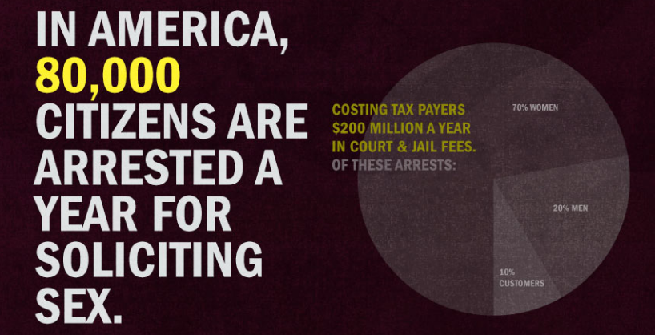
Despite the government trying to manage sex work throughout the country, it is evident with the statistics above that sex work is still very prominent throughout the United States. Because of the revenue that sex work is bringing in the United States, it made me wonder about the danger in working in this field. In 2004, the homicide rate for female sex workers in the United States was estimated to be 204 per 100,00 (Potterat et al. 2004). On top of the homicide rate being so high for sex workers, they are also subjected to all types of abuse including physical, sexual, emotional, etc. The most interesting statistic that really stuck out to me was the fact that sex workers in the United States tend to get busted more often than Johns or pimps by a huge margin. “Every year in the U.S., between 70,000 and 80,000 people are arrested for prostitution, costing taxpayers approximately $200 million. The breakdown of arrests: 70% female prostitues and madams, 20% male prostitutes and pimps, and just 10% Johns” (HG Legal Resources). This to me shows an inequality in the system by punishing sex workers more than the individuals who have the power. On top of the dangers presented above, sex workers are also subjected to well-documented risks which include sexual harassment, rape, and rape without a condom (Farley 2018).
Sex Work in India
I chose my second country as India because it varies greatly when compared to the United States. In India, sex workers are often referred to as “tawaif” or “devadasi” (Lawnn.com 2018). Unlike in the United States, prostitution is actually legal in India. In 2007, the Ministry of Women and Child Development reported the presence of over 3 million female sex workers in India, with 35.47 percent of them entering the trade before the age of 18 years (BBC 2016). It is important to note that despite prostitution being legal in India, a number of related activities including soliciting in a public place, owning or managing a brothel, prostitution in a hotel, child prostitution and pimping and pandering are illegal (BBC 2009). When compared to the United States, institutions aren’t really trying to manage sex work in India. In fact, the law is incredibly vague when it comes to prostitution itself. Different sources have different information regarding what’s legal and what’s not, but one things remains constant, a woman can legally use her body in exchange for material benefit. What I found interesting was that male sex workers are not recognized in any law in India.
Penalties for Sex Work in India
One of the most basic laws that has been passed in India regarding sex work is The Immoral Traffic (Suppression) Act which was passed in 1956. This law states that sex workers are allowed to ply their trade in private, but they cannot carry out their business in the open (Samudranil 2015). Similar to the United States, penalties exist for both the workers and the clients. Sex workers in India will be arrested if caught trying to solicite their services and seducing others. On top of this, if call girls are found guilty of making their phone numbers public, they can be imprisoned for a maximum of 6 months along with financial penalties (Samudranil 2015). With regard to the clients, those who consort with prostitutes of indulge in such activities within 200 yards of a designated are can be imprisoned for a maximum of 3 months and need to pay fines as well. Lastly, if a client indulges in such activities with someone who is under the age of 18, he or she can be jailed between 7-10 years (Samudranil 2015). These laws and penalities show how the government tries to manage sex work, but similar to the United States, it isn’t being as effective as some government officials may hope.
Categorizing Sex Work in India
When researching, I found an interesting article that looked at the human rights of female sex workers in India and what it would take to moving from prohibition to decriminalization and a pro-work model. This journal article placed India’s current sex work framework into the prohibition model and argues that the legal response to sex work closely related to a pro-work model. Although the introduction to this model poses considerable challenges, it has the greatest capacity to first, reduce the crime and corruption that surrounds the sex trade; second, to enhance, promote and protect public health and third, provide appropriate legal and human rights protection to sex workers as international obligations require (Sagade and Forster 2018). This article shows just how complex sex work is and what it is going to take to make changes within the government.
Decriminalization of Sex Work

With regard to all of this information, many people are fighting to decriminalize sex work. From what I read, many supporters of this decriminalization argue that decriminalization not only respects the human rights and dignity of sex workers, but also helps guard against violence and abuse sex workers have to endure everyday. It is important to acknowledge the various reasons as to why sex workers go into the field in the first place whether that be for a temporary means to survive, other income, or because they want and enjoy the field of work. Decriminalization of sex work can also help guard and and bring light to violence and abuse that sex workers face. Because of legality purposes, sex workers often migrate towards areas that are less populated and visible to law enforcement officials. Because of this, violence and abuse are often hidden out of fear for being reprimanded by law enforcement. There is so much negative connotation surrounding the field of sex work and lack of education revolving around potential reasons as to why individuals enter this field and this needs to change.
Decriminalization of Sex Work cont.
When researching this topic, I came across an interesting journal article that discussed culturally competent health care for sex workers. In this article, the authors dove into examining myths that stigmatize sex-work and hinder their access to care. As stated above, sex workers face the possibility of violence and social stigmatization that is introduced into society and because of this possibility, sex workers have an increased risk of developing mental health disorders. Because of these risks, full-service sex workers can benefit from receiving health care, however a constellation of individual, organizational, and systemic barriers limit care utilization (Sawicki et. al., 2019). If this profession was decriminalized, sex workers could overall put their physical and mental health first and make it a priority. On top of allowing sex workers to make health a priority, this action would also empower this group of workers who are often stigmatized by society.
We Are Camily

The information presented in this discussion directly correlates to our assigned readings in “Camming: Money, Power, and Pleasure in the Sex Work Industry” by Angela Jones. In chapter 6, the author goes into detail as to what exactly “camily” means. According to Jones, camily refers to “a vibrant community of webcam performers that have developed in tandem with the camming industry. The “camily”, as many performers refer to it, is a loosely tied network of performers who provide one another with various forms of support and friendship” (Jones 2020). I think it is remarkable that these communities form and unite sex workers together. They are able to enlarge their social support system by not only meeting and engaging with others, but by being able to relate to one another.
Deviance and Sex Work

I thought it would be incredibly interesting to look at sex work and Becker’s meanings of deviance to find similarities. According to Becker, “Rules tend to be applied more to some persons than others…This variation occurs even though the original infraction of the rule is the same in two cases” (Becker 12-13). This loosely ties to what was stated above regarding how sex workers in the United States tend to get busted more often than Johns or pimps by a huge margin. This to me, shows just how rules can be applied more to some people than others. Johns and pimps are individuals who control sex workers usually through physical violence and force, but statistics show that 70% of arrests are female sex workers and only 20% of arrests are pimps and male prostitutes, 10% being johns. In my opinion, this shows a huge misjustice for female sex workers. As stated above, the homicide rate for female sex workers in the United States was estimated to be 204 per 100,00 (Potterat et al. 2004). These dangers are really overlooked by society who are being misconstrued by media developing stereotypes surrounding the profession. To me, it is so interesting because although both parties are partipating in the field, rules are more applied to female sex workers (although I can argue that what johns and pimps are doing is far worse).
Discussion Question: Do you feel as though sex work should be globally decriminalized? Please justify your answer.
Discussion Question 2: Why do you think female sex workers are more likely to be arrested than pimps and johns? Explain.
Works Cited Page
10 Reasons to Decriminalize Sex Work. (2015, April). Retrieved April 14, 2020, from https://www.opensocietyfoundations.org/publications/ten-reasons-decriminalize-sex-work
Becker, Howard S. Outsiders Studies in the Sociology of Deviance. 1973.
Farley, M. (2018, January). Risks of Prostitution: When The Person Is the Product . Retrieved from https://www.journals.uchicago.edu/doi/full/10.1086/695670?mobileUi=0&
India sex workers get life cover. (2008, May 1). Retrieved April 14, 2020, from https://web.archive.org/web/20160304234403/http://news.bbc.co.uk/2/hi/south_asia/7376762.stm
Jones, A. (2020). Camming: money, power, and pleasure in the sex work industry. New York: New York University Press.
Lubin, G. (2012, January 17). There Are 42 Million Prostitutes In The World, And Here’s Where They Live. Retrieved April 13, 2020, from https://www.businessinsider.com/there-are-42-million-prostitutes-in-the-world-and-heres-where-they-live-2012-1
Potterat, J. J., Brewer, D. D., Muth, S. Q., Rothenberg, R. B., Woodhouse, D. E., Muth, J. B., … Brody, S. (2004, April 15). Mortality in a long-term open cohort of prostitute women. Retrieved April 14, 2020, from https://www.ncbi.nlm.nih.gov/pubmed/15051587
Lawnn.com. (2020, April 8). Prostitution In India: Laws, Rights And Legal Protection Of Sex Workers. Retrieved April 14, 2020, from https://www.lawnn.com/prostitution-india/
Prostitution in the United States . (n.d.). Retrieved April 14, 2020, from https://www.hg.org/legal-articles/prostitution-in-the-united-states-30997
Prostitution Statistics. (2020). Retrieved April 13, 2020, from https://www.havocscope.com/prostitution-statistics/
Sagade, J., & Forster, C. (2018, January 15). Recognising the Human Rights of Female Sex Workers in India: Moving from Prohibition to Decriminalisation and a Pro-work Model – Jaya Sagade, Christine Forster, 2018. Retrieved April 28, 2020, from https://journals.sagepub.com/doi/full/10.1177/0971521517738450
Samudranil. (2015, August 20). Legalising Prostitution in India. Retrieved April 14, 2020, from https://www.mapsofindia.com/my-india/india/legal-prostitution-in-india
Sawicki, D. A., Meffert, B. N., Read, K., & Heinz, A. J. (2019, February 19). Culturally Competent Health Care for Sex Workers: An Examination of Myths That Stigmatize Sex-Work and Hinder Access to Care. Retrieved April 26, 2020, from https://www.ncbi.nlm.nih.gov/pmc/articles/PMC6424363/
US Federal and State Prostitution Laws and Related Punishments – Prostitution – ProCon.org. (n.d.). Retrieved April 13, 2020, from https://prostitution.procon.org/us-federal-and-state-prostitution-laws-and-related-punishments/
According to Goffman, the social process of passing can only be understood when looking at the context of stigma. Goffman’s theory on stigma is, “an attribute that is deeply discrediting which has the effect of reducing the stigmatized person, in the eyes of others. From a whole and usual person to a tainted, discounted one” (Goffman, 1986). In other words, a stigma is an attribute or behavior that could cause an individual to be classified by others as having something undesirable, rather than being accepted based on the “norm.”
In Stigma: Notes on the Management of Spoiled Identity, Goffman expresses the suggestion that society evidently uses collective characteristics with regard to social groups to aid in the construction of how we will relate to particular individuals who are thought to members of certain groups. The term Goffman uses to describe this phenomenon is social identity. This social identity is something that we construct and choose to uphold into our daily behaviors. Social identity is often made up of both personal and structural behaviors that are often acquired in the context of social setting.
Towards the beginning of Goffman’s theorizing about stigma, he created this typology regarding how physical deformities or blemishes found in the characteristics of individuals are “domineering or unnatural passions” and also looked at affiliations of race, religion, and an individual’s nationality (Goffman, 1990). For this assignment, a particular social example that represents social passing is an individual who is currently surviving with a mental illness.
Even in today’s society, there is such a huge stigma surrounding those individuals who are living with a mental illness. I have also been fascinated when looking at how individuals who do not have a mental illness view those who do and why. Upon research, I came across an academic journal article that assessed the mental health stigma that currently exists. This article offers a fascinating point that shows how despite public knowledge regarding physical diseases in seen as somewhat beneficial, knowledge regarding mental illness is often disregarded by the general public. Because of this, “many persons suffering from common mental disorders may not receive appropriate (therapeutic) social support due to the community’s lack of awareness (Mannarini and Rossi, 2019).
This lack of social support and fear of being labeled by their peers can be seen as one of the many reasons as to why many individuals avoid asking for help and seeking appropriate care for their mental illness. According to both Walker and Read (2002), “people’s dominant impression of mental illness is that it leads to unpredictable behaviors and loss of control.” Despite popular misconceptions surrounding individuals with mental illness, there is no scientific data that supports that there is a relationship between mental illness and the individuals participating in violent behaviors. Due to the lack of scientific evidence, I feel as though it is appropriate to assume that many opinions regarding those who are living with a mental illness are based off of stereotypes they may have been introduced to. The introduction of these stereotypical ideas can often come from media portrayal and cultural beliefs.
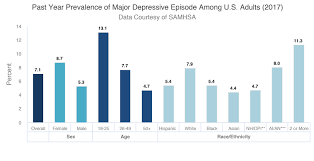
For this particular discussion, I want to focus on both depression and obsessive-compulsive disorder. Both of these mental illnesses are often hidden by individuals who aren’t living with them. Cases of individuals who are suffering from these particular illnesses vary. Some people who are living with depression or OCD may be trying to hide signs from others or they genuinely do not realize that they have them. With depression, there are many signs that are easy to recognize such as feelings of hopelessness, but some are less obvious than others. Some symptoms that may be less recognizable are appetite and weight changes, alcohol or drug use, and loss of concentration. What is difficult is the fact that because these symptoms can be a result of anything, individuals may not have the ability to see that these individuals may be suffering from depression. It is estimated that 16.2 million U.S. adults had at least one major depressive episode in 2016, representing 6.7 percent of the U.S. adult population (National Institute of Mental Health, 2018).
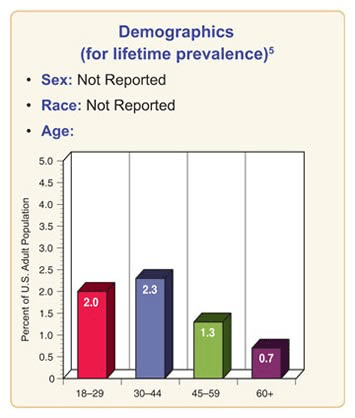
Similar to depression, individuals who are living with OCD have the ability to hide their mental illness. The key is that kids with OCD can hide their OCD symptoms during the day, only to explode at home because of their tremendous effort (OCD: The Pain of Hiding Symptoms- Dr. Susan Swedo, 2012). In the United States, about 1 in 40 adults and 1 in 100 children have OCD (National Institute of Mental Health). These statistics are alarming, but nothing more alarming than people feeling as though they have to hide their symptoms in fear of being ridiculed by society. On top of hiding their symptoms, individuals who are living with a mental illness have the worry about whether or not they are insured. 10.3% (over 4.7 million) of adults with a mental illness remain uninsured (Mental Health America, 2020).
Works Cited
Goffman, E. (1990). Stigma notes on the management of spoiled identity. London: Penguin Books.
Hidden signs of depression: How to spot them and what to do. (n.d.). Retrieved February 28, 2020, from https://www.medicalnewstoday.com/articles/325513
Koskie, B. (2019, May 14). Depression: Facts, Statistics, and You. Retrieved February 29, 2020, from https://www.healthline.com/health/depression/facts-statistics-infographic#1
Mannarini, S., & Rossi, A. (2019). Assessing Mental Illness Stigma: A Complex Issue. Frontiers in Psychology, 9. doi: 10.3389/fpsyg.2018.02722
Mental Health in America – Access to Care Data. (n.d.). Retrieved March 2, 2020, from https://www.mhanational.org/issues/mental-health-america-access-care-data
Obsessive-Compulsive Disorder (OCD). (n.d.). Retrieved March 2, 2020, from https://adaa.org/understanding-anxiety/obsessive-compulsive-disorder-ocd
Online Video:

Hi, my name is Antonina Morino and I am a junior at Siena College. I am currently majoring in Social Work and minoring in both Psychology and Criminal Justice. I was born in Toms River, New Jersey and lived until the age of four, when my mom made the conscious decision to move our family to White Plains, New York to take care of my grandfather who had become ill. I have lived in White Plains ever since and cannot truly put into words how much the city means to me. When I was a sophomore in high school, I began working at Ralph’s Famous Italian Ices and for the past two years I have been working as the manager. I graduated in the top 10 percent of my class at White Plains High School in 2017, along with my identical twin sister.
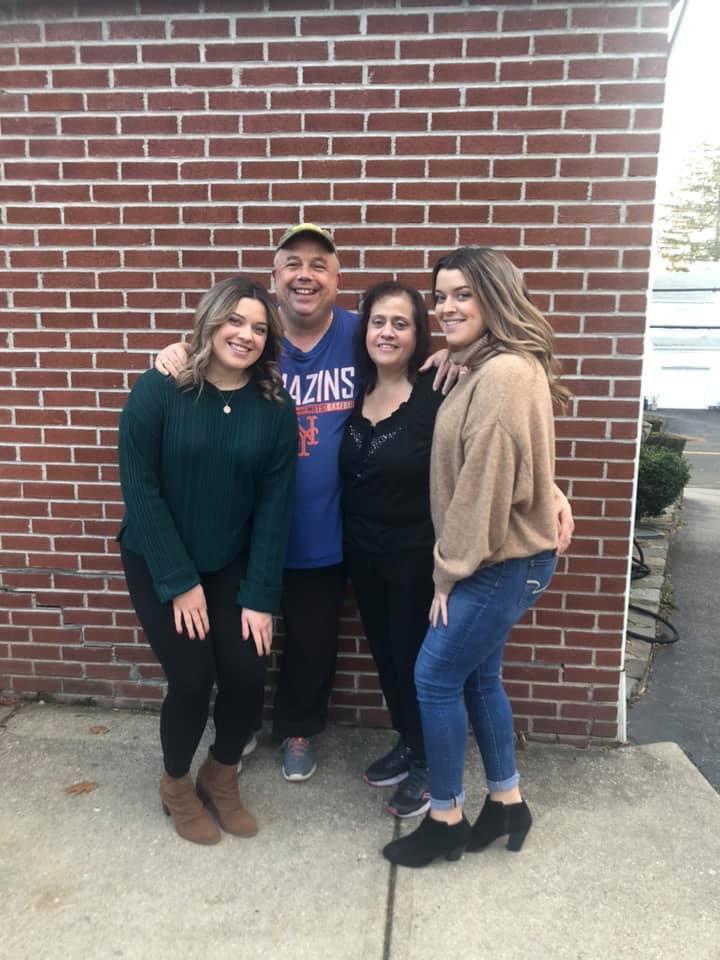
My immediate family consists of my mom, dad, and my twin sister who is my world. Growing up, my dad had an extremely rough childhood. His dad wasn’t in the picture and after he was born his grandparents took care of him until his mom decided she wanted him around 12. They didn’t have anything and when he got older he worked extremely hard to ensure that he would never be in a similar situation again. He didn’t have any family besides his mom, often spending time with friends when he wasn’t working. He is extremely hard on my sister and I, but I know it is because he wants us to have the opportunities he didn’t have. On the other hand, my mom grew up in a good home with five of her siblings. She’s italian so she was constantly surrounded by family members. She was never alone and although her family was nosey, she wouldn’t have traded her childhood for anything.

By growing up in White Plains, I was able to experience the best of both worlds. Being about 30 minutes away from New York City, I was able to experience the “hustle and bustle” lifestyle, but was also able to get a glimpse of what suburban living looked and felt like. White Plains also allowed me to be introduced to various different cultures at an early age and for this I will forever be grateful. When looking at student diversity in the White Plains City School District, 56.6% of students are Hispanic, 23.4% White, 13.5% Black, 3.9% Asian, and 2.6% Multiracial. After graduating in 2017, both my twin sister and I made the decision to continue our academic careers at Siena College (no, we do not live together) due to the various opportunities and great merit scholarships we both received.
Being about 2 and a half hours away from Siena, I make up about 75% of students who dorm here on campus. Not only has living on campus provided me with friendships that I know will last a lifetime, but I have also been able to really dive into extracurricular activities such as the Mentoring Program and Italian Club. On top of these clubs, I also work three jobs (yes, three). These include being an Ambassador (a fancy word for tour guide), working at the calling center, and tutoring other students. Dorming has also provided me with not only the opportunity to grow independently by showing me what it takes to essentially live on my own, but also allowing me to learn how to manage my time. As stated above, I am currently working towards receiving my Bachelor’s degree in Social Work. The Social Work Department is very small here at Siena with 22 students graduating with their Bachelor’s degree in 2018. With this major being so small, I have been able to develop relationships with almost every single individual in the program while also developing close relationships with my professors.
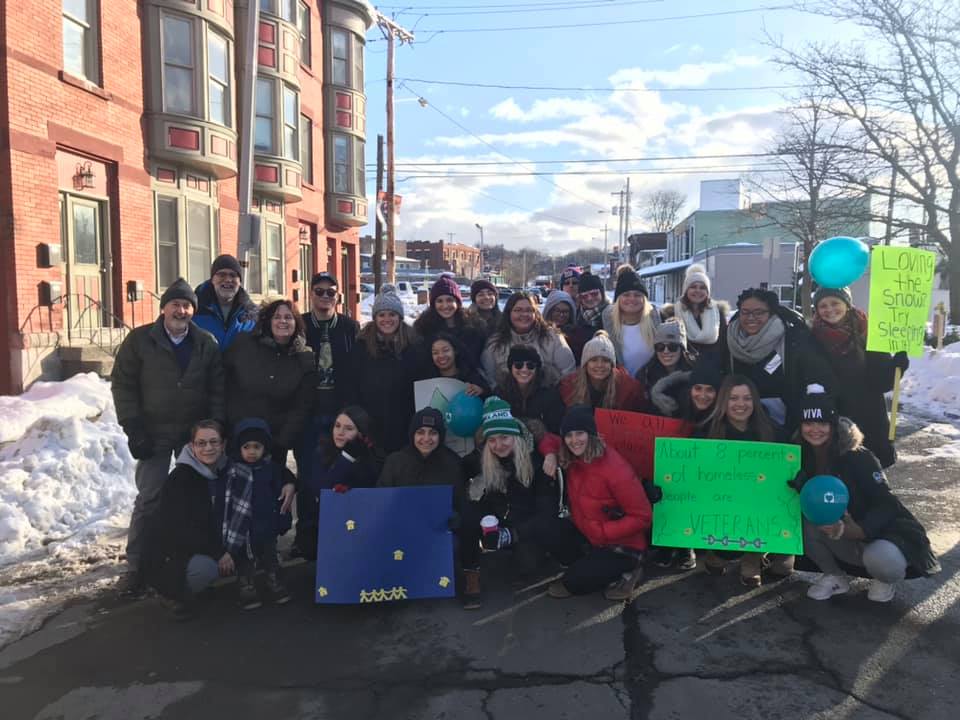
In Outsiders, Beck introduces deviance as, “…anything that varies too widely from the average” (Becker 4). Upon reading this definition, I thought about how I am an identical twin, seeing as that the odds of having identical twins are about 3 in 1,000. My mom found out that she was having identical twins when she was around 5 months pregnant. Her doctor had told her that because the egg had split so far along in her pregnancy, my twin sister and I would be conjoined by the membrane. I knew conjoined twins were rare, but I had absolutely no idea to what extent. Conjoined twins occur once in every 50,000 to 60,000 births, approximately 70 percent female. My mother had a surgery booked for us to be separated, but after giving birth the doctors were surprised to see that we were two healthy separate girls.

Growing up having an identical twin is an experience like no other. My sister Amber and I grew up as close as siblings can get. We had and still do have a bond that cannot be broken. We are each other’s best friends, but it is a completely unique experience to have a sister the same age as you. Because we are constantly going through the different phases of life together, we often face several stereotypes because we are twins. The first stereotype we often encounter is that because we are identical twins, we should always want and act in the same way. Although extremely similar, Amber and I have distinctly different personalities. While I am more loud and outgoing, my sister tends to typically be shyer and more to herself. When people meet us, they are honestly shocked to see how different we are because they just assumed that since we’re twins, we should be exactly alike.

Another stereotype that we have often face as twins is the constant comparison between each other. When people are getting to know us for the first time, they often try to characterize us by what is different about us. Especially in middle school, we were constantly compared by terms such as “the smart twin” or “the nice twin” and sometimes even “the pretty twin”. This constant comparison between a set of twins shows that we are always being measured in relation to the other’s failure or success. Despite some of these stereotypes that we have encountered, I wouldn’t trade being a twin for the world. I was blessed with the most incredible twin sister and can’t imagine my life without her.
Despite not being able to come up with examples pertaining to my personal life, I feel as though it is important to mention the other defintions of deviance that Becker introduces. The first one I feel is important to mention is “Deviance is the failure to obey the group rules” (Becker 8). I feel as though this defintion is significant because it is what most people think when they hear the word deviance. The other definition of defiance I feel is significant is “When a role is enforced, the person who is supposed to have broken it may be seen as a special kind of person, one who cannot be trusted to live by the rules agreed on by the group. He is regarded as an outside” (Becker 1). These various definitions of deviance presented by Becker show how individuals should think in an interdisplinary way. Many words have various meanings and it is important to be aware of them.
Social institutions such as education and the government have had drastic impacts on my life. Because not many of my family members received a college education, an expectation was put on my sister and I that we would go to college. With my dad going to trade school and my mom receiving her Bachelor’s degree, all they wanted what for us to further our education beyond what they had accomplished. By moving in with my grandfather, this provided my family with the financial stability to go to college. We received numerous grants, scholarships, and financial aid that have allowed us to receive an education at Siena College. Being the first two people in our family to move away for college, Amber and I see just how privileged we are to receive such a wonderful education and do not take this opportunity for granted.

My family’s life has definitely been impacted by the government. At a young age, my mom was diagnosed with rheumatoid arthritis, an autoimmune disease that commonly affects the joints, organs and body systems. I never knew how rare rheumatoid arthritis is because my mom has been living with the disease my entire life, but I learned that out of every 100,00 people, only 41 are diagnosed. After giving birth, my mother’s condition worsened and she could no longer work at IBM. She met the requirements to receive disability benefits, allowing her to receive checks in the mail each month from the government.
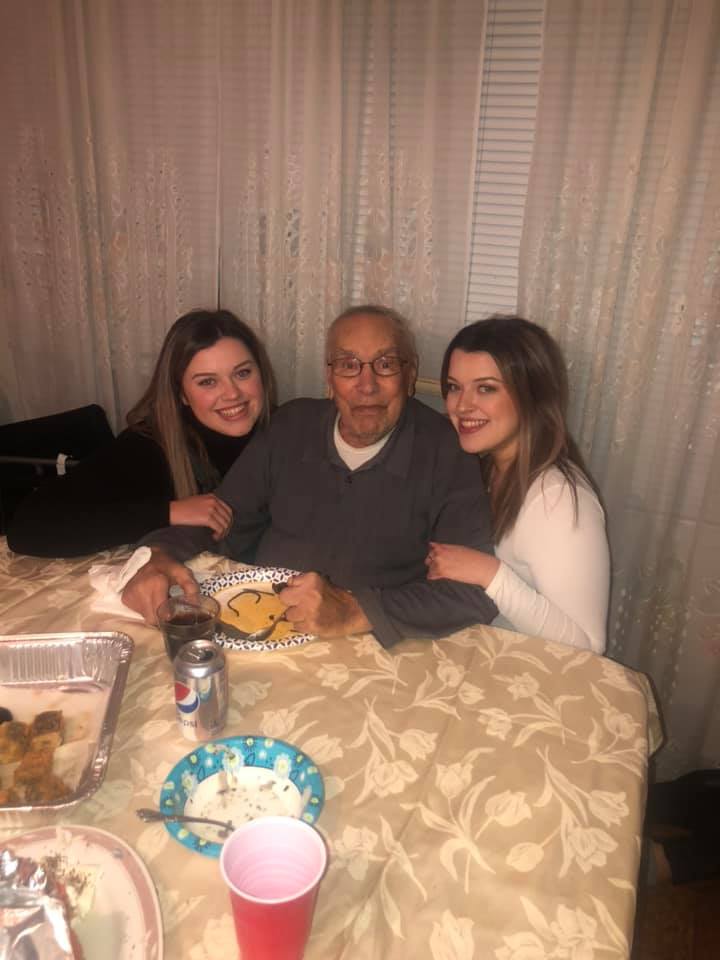
Another instance that demonstrates how my family is impacted by the government has to do with my grandpa immigrating to the United States from Italy. My grandpa was an 18-year-old boy living in Italy when he was drafted in World War II. When going through the necessary procedures, he failed the physical examination and was thus excused from participating in the war. The mere act of being drafted shows just how much power the military has over its citizens and when necessary, they will use this power effectively. After leaving Italy on April 26th, 1948, he finally arrived at Ellis Island on May 21st. In order to pass through, my grandpa had to give his name and had to go through a thorough physical examination and if they found that he was healthy, he would be admitted to enter the United States. This to me shows how the government utilized its power to determine who should be eligible to enter the country.
Becker, Howard S. Outsiders Studies in the Sociology of Deviance. 1973.
This is an example post, originally published as part of Blogging University. Enroll in one of our ten programs, and start your blog right.
You’re going to publish a post today. Don’t worry about how your blog looks. Don’t worry if you haven’t given it a name yet, or you’re feeling overwhelmed. Just click the “New Post” button, and tell us why you’re here.
Why do this?
The post can be short or long, a personal intro to your life or a bloggy mission statement, a manifesto for the future or a simple outline of your the types of things you hope to publish.
To help you get started, here are a few questions:
You’re not locked into any of this; one of the wonderful things about blogs is how they constantly evolve as we learn, grow, and interact with one another — but it’s good to know where and why you started, and articulating your goals may just give you a few other post ideas.
Can’t think how to get started? Just write the first thing that pops into your head. Anne Lamott, author of a book on writing we love, says that you need to give yourself permission to write a “crappy first draft”. Anne makes a great point — just start writing, and worry about editing it later.
When you’re ready to publish, give your post three to five tags that describe your blog’s focus — writing, photography, fiction, parenting, food, cars, movies, sports, whatever. These tags will help others who care about your topics find you in the Reader. Make sure one of the tags is “zerotohero,” so other new bloggers can find you, too.

 The Life of Antonina Morino