Overview
Before the discussion starts, it is important to note that this piece of writing is talking about chosen sex work, not trafficking. This post will compare institutions in both the United States and India and how they manage sex work through laws, policies, etc. I will also be interchanging the terms sex work and prostitution. I personally like to use the term sex work, but many of the sources that were used to analyze research use the term prostitution.
Sex Work in the United States
Sex work in the United States is not only common, but it also generates a significant amount of revenue each year. A 2012 report by Fondation Scelles indicated that there were an estimated 1 million prostitutes in the United States (Lubin 2012). It was also estimated that the prostitution in the United States generates around $14 billion a year (Prostitution Statistics, havoscope.com). Despite this, sex work is illegal in the majority of the United States. This is a result of various state laws rather than federal laws.For this discussion, I thought it would be interesting to look at some of the US federal laws and state prostitution laws, as well as related punishments if found guilty of these offenses. In terms of federal laws, the Inadmission Aliens title speaks volumes as to how the government attempts to manage sex work throughout the country. This title federal law states that “Any alien who – – (i) is coming to the United States solely, principally, or incidentally to engage in prostitution, or has engaged in prostitutions within 10 years of the date of application for a visa, admission, or adjustment of status… is inadmissible” (ProCon 2018). Anyone that is found guilty of this, will be denied admission into the United States.
Sex Work in the State of New York
Because I live in the state of New York, I thought it would be particularly interesting to look at some of the state laws surrounding sex work. The research I found separated the penalties that both the sex worker and the customer could face if found guilty. In New York, the penalty for the sex worker is up to 3 months and up to $500, classifying as a Class B misdemeaner (ProCon 2018). Similarly, an individual who found to be a customer may face up to one year and up to $1000 as a penalty, classifying as a Class A misdemeanor (ProCon 2018). The penalties that both sex workers and customers may face act as an example for how government, as an institution, tries to manage sex workers. Government officials hope that by creating laws and punishments if caught, would limit individuals participating in sex work (which clearly isn’t the case when reviewing statistics revolving around prevalance in the United States).
Danger of Prostitution in the United States
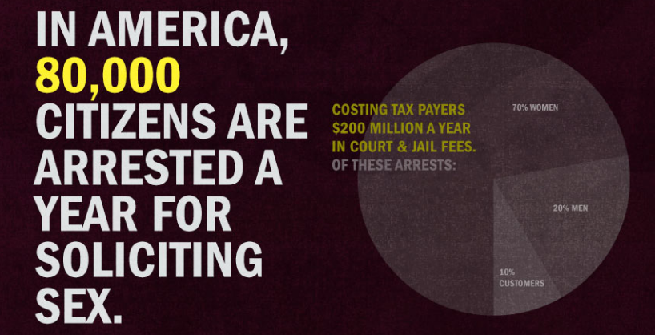
Despite the government trying to manage sex work throughout the country, it is evident with the statistics above that sex work is still very prominent throughout the United States. Because of the revenue that sex work is bringing in the United States, it made me wonder about the danger in working in this field. In 2004, the homicide rate for female sex workers in the United States was estimated to be 204 per 100,00 (Potterat et al. 2004). On top of the homicide rate being so high for sex workers, they are also subjected to all types of abuse including physical, sexual, emotional, etc. The most interesting statistic that really stuck out to me was the fact that sex workers in the United States tend to get busted more often than Johns or pimps by a huge margin. “Every year in the U.S., between 70,000 and 80,000 people are arrested for prostitution, costing taxpayers approximately $200 million. The breakdown of arrests: 70% female prostitues and madams, 20% male prostitutes and pimps, and just 10% Johns” (HG Legal Resources). This to me shows an inequality in the system by punishing sex workers more than the individuals who have the power. On top of the dangers presented above, sex workers are also subjected to well-documented risks which include sexual harassment, rape, and rape without a condom (Farley 2018).
Sex Work in India
I chose my second country as India because it varies greatly when compared to the United States. In India, sex workers are often referred to as “tawaif” or “devadasi” (Lawnn.com 2018). Unlike in the United States, prostitution is actually legal in India. In 2007, the Ministry of Women and Child Development reported the presence of over 3 million female sex workers in India, with 35.47 percent of them entering the trade before the age of 18 years (BBC 2016). It is important to note that despite prostitution being legal in India, a number of related activities including soliciting in a public place, owning or managing a brothel, prostitution in a hotel, child prostitution and pimping and pandering are illegal (BBC 2009). When compared to the United States, institutions aren’t really trying to manage sex work in India. In fact, the law is incredibly vague when it comes to prostitution itself. Different sources have different information regarding what’s legal and what’s not, but one things remains constant, a woman can legally use her body in exchange for material benefit. What I found interesting was that male sex workers are not recognized in any law in India.
Penalties for Sex Work in India
One of the most basic laws that has been passed in India regarding sex work is The Immoral Traffic (Suppression) Act which was passed in 1956. This law states that sex workers are allowed to ply their trade in private, but they cannot carry out their business in the open (Samudranil 2015). Similar to the United States, penalties exist for both the workers and the clients. Sex workers in India will be arrested if caught trying to solicite their services and seducing others. On top of this, if call girls are found guilty of making their phone numbers public, they can be imprisoned for a maximum of 6 months along with financial penalties (Samudranil 2015). With regard to the clients, those who consort with prostitutes of indulge in such activities within 200 yards of a designated are can be imprisoned for a maximum of 3 months and need to pay fines as well. Lastly, if a client indulges in such activities with someone who is under the age of 18, he or she can be jailed between 7-10 years (Samudranil 2015). These laws and penalities show how the government tries to manage sex work, but similar to the United States, it isn’t being as effective as some government officials may hope.
Categorizing Sex Work in India
When researching, I found an interesting article that looked at the human rights of female sex workers in India and what it would take to moving from prohibition to decriminalization and a pro-work model. This journal article placed India’s current sex work framework into the prohibition model and argues that the legal response to sex work closely related to a pro-work model. Although the introduction to this model poses considerable challenges, it has the greatest capacity to first, reduce the crime and corruption that surrounds the sex trade; second, to enhance, promote and protect public health and third, provide appropriate legal and human rights protection to sex workers as international obligations require (Sagade and Forster 2018). This article shows just how complex sex work is and what it is going to take to make changes within the government.
Decriminalization of Sex Work

With regard to all of this information, many people are fighting to decriminalize sex work. From what I read, many supporters of this decriminalization argue that decriminalization not only respects the human rights and dignity of sex workers, but also helps guard against violence and abuse sex workers have to endure everyday. It is important to acknowledge the various reasons as to why sex workers go into the field in the first place whether that be for a temporary means to survive, other income, or because they want and enjoy the field of work. Decriminalization of sex work can also help guard and and bring light to violence and abuse that sex workers face. Because of legality purposes, sex workers often migrate towards areas that are less populated and visible to law enforcement officials. Because of this, violence and abuse are often hidden out of fear for being reprimanded by law enforcement. There is so much negative connotation surrounding the field of sex work and lack of education revolving around potential reasons as to why individuals enter this field and this needs to change.
Decriminalization of Sex Work cont.
When researching this topic, I came across an interesting journal article that discussed culturally competent health care for sex workers. In this article, the authors dove into examining myths that stigmatize sex-work and hinder their access to care. As stated above, sex workers face the possibility of violence and social stigmatization that is introduced into society and because of this possibility, sex workers have an increased risk of developing mental health disorders. Because of these risks, full-service sex workers can benefit from receiving health care, however a constellation of individual, organizational, and systemic barriers limit care utilization (Sawicki et. al., 2019). If this profession was decriminalized, sex workers could overall put their physical and mental health first and make it a priority. On top of allowing sex workers to make health a priority, this action would also empower this group of workers who are often stigmatized by society.
We Are Camily
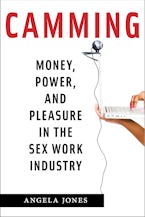
The information presented in this discussion directly correlates to our assigned readings in “Camming: Money, Power, and Pleasure in the Sex Work Industry” by Angela Jones. In chapter 6, the author goes into detail as to what exactly “camily” means. According to Jones, camily refers to “a vibrant community of webcam performers that have developed in tandem with the camming industry. The “camily”, as many performers refer to it, is a loosely tied network of performers who provide one another with various forms of support and friendship” (Jones 2020). I think it is remarkable that these communities form and unite sex workers together. They are able to enlarge their social support system by not only meeting and engaging with others, but by being able to relate to one another.
Deviance and Sex Work

I thought it would be incredibly interesting to look at sex work and Becker’s meanings of deviance to find similarities. According to Becker, “Rules tend to be applied more to some persons than others…This variation occurs even though the original infraction of the rule is the same in two cases” (Becker 12-13). This loosely ties to what was stated above regarding how sex workers in the United States tend to get busted more often than Johns or pimps by a huge margin. This to me, shows just how rules can be applied more to some people than others. Johns and pimps are individuals who control sex workers usually through physical violence and force, but statistics show that 70% of arrests are female sex workers and only 20% of arrests are pimps and male prostitutes, 10% being johns. In my opinion, this shows a huge misjustice for female sex workers. As stated above, the homicide rate for female sex workers in the United States was estimated to be 204 per 100,00 (Potterat et al. 2004). These dangers are really overlooked by society who are being misconstrued by media developing stereotypes surrounding the profession. To me, it is so interesting because although both parties are partipating in the field, rules are more applied to female sex workers (although I can argue that what johns and pimps are doing is far worse).
Discussion Question: Do you feel as though sex work should be globally decriminalized? Please justify your answer.
Discussion Question 2: Why do you think female sex workers are more likely to be arrested than pimps and johns? Explain.
Works Cited Page
10 Reasons to Decriminalize Sex Work. (2015, April). Retrieved April 14, 2020, from https://www.opensocietyfoundations.org/publications/ten-reasons-decriminalize-sex-work
Becker, Howard S. Outsiders Studies in the Sociology of Deviance. 1973.
Farley, M. (2018, January). Risks of Prostitution: When The Person Is the Product . Retrieved from https://www.journals.uchicago.edu/doi/full/10.1086/695670?mobileUi=0&
India sex workers get life cover. (2008, May 1). Retrieved April 14, 2020, from https://web.archive.org/web/20160304234403/http://news.bbc.co.uk/2/hi/south_asia/7376762.stm
Jones, A. (2020). Camming: money, power, and pleasure in the sex work industry. New York: New York University Press.
Lubin, G. (2012, January 17). There Are 42 Million Prostitutes In The World, And Here’s Where They Live. Retrieved April 13, 2020, from https://www.businessinsider.com/there-are-42-million-prostitutes-in-the-world-and-heres-where-they-live-2012-1
Potterat, J. J., Brewer, D. D., Muth, S. Q., Rothenberg, R. B., Woodhouse, D. E., Muth, J. B., … Brody, S. (2004, April 15). Mortality in a long-term open cohort of prostitute women. Retrieved April 14, 2020, from https://www.ncbi.nlm.nih.gov/pubmed/15051587
Lawnn.com. (2020, April 8). Prostitution In India: Laws, Rights And Legal Protection Of Sex Workers. Retrieved April 14, 2020, from https://www.lawnn.com/prostitution-india/
Prostitution in the United States . (n.d.). Retrieved April 14, 2020, from https://www.hg.org/legal-articles/prostitution-in-the-united-states-30997
Prostitution Statistics. (2020). Retrieved April 13, 2020, from https://www.havocscope.com/prostitution-statistics/
Sagade, J., & Forster, C. (2018, January 15). Recognising the Human Rights of Female Sex Workers in India: Moving from Prohibition to Decriminalisation and a Pro-work Model – Jaya Sagade, Christine Forster, 2018. Retrieved April 28, 2020, from https://journals.sagepub.com/doi/full/10.1177/0971521517738450
Samudranil. (2015, August 20). Legalising Prostitution in India. Retrieved April 14, 2020, from https://www.mapsofindia.com/my-india/india/legal-prostitution-in-india
Sawicki, D. A., Meffert, B. N., Read, K., & Heinz, A. J. (2019, February 19). Culturally Competent Health Care for Sex Workers: An Examination of Myths That Stigmatize Sex-Work and Hinder Access to Care. Retrieved April 26, 2020, from https://www.ncbi.nlm.nih.gov/pmc/articles/PMC6424363/
US Federal and State Prostitution Laws and Related Punishments – Prostitution – ProCon.org. (n.d.). Retrieved April 13, 2020, from https://prostitution.procon.org/us-federal-and-state-prostitution-laws-and-related-punishments/
 The Life of Antonina Morino